
7 Signs a Rural Hertford County Listing Is Priced to Move

In this post
- 1. The septic permit on file matches the bedroom count
- 2. The manufactured home is de-titled and sits on a certified foundation
- 3. The asking price has come down, and the listing shows it
- 4. The listing has sat through a change of season
- 5. The well has a water test on paper
- 6. A river parcel comes with an elevation certificate
- 7. The land under the house would carry the number on its own
- The honest trade-off
- The bottom line
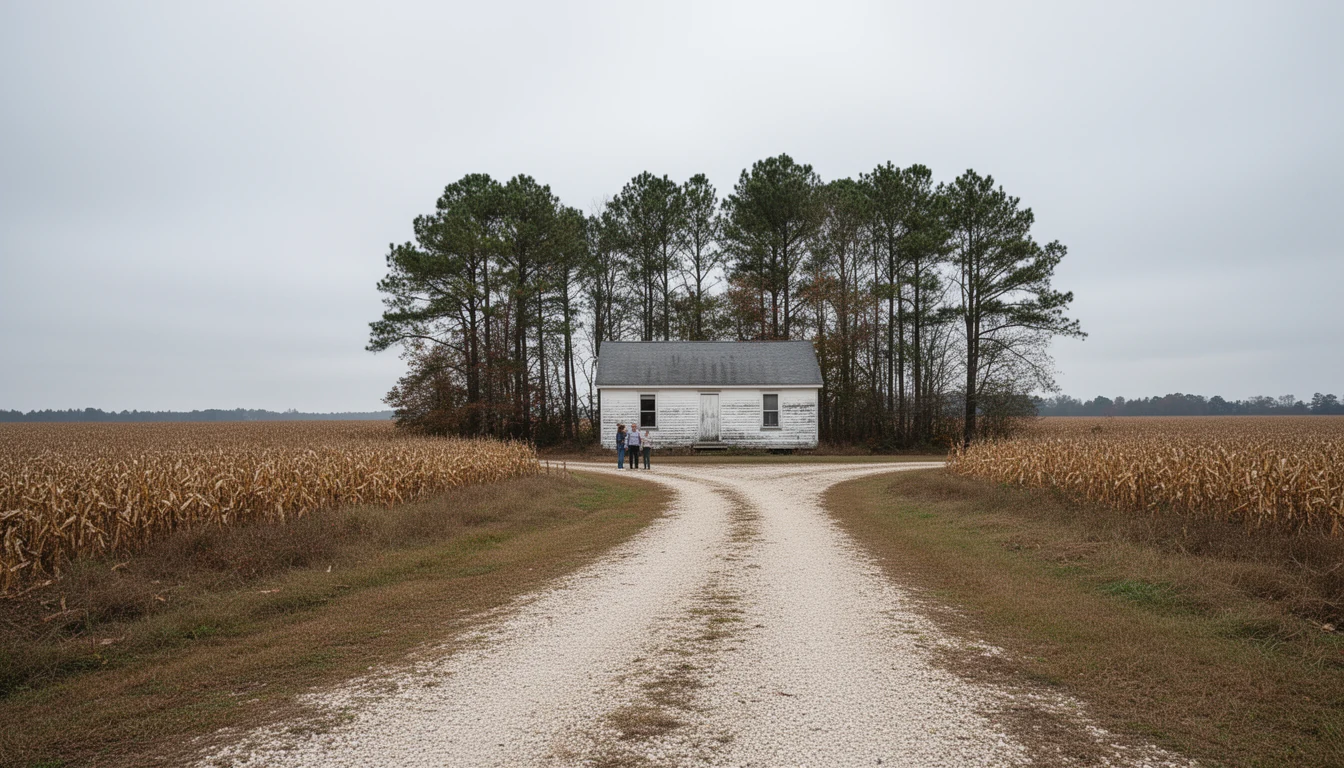
Out past Cofield on a Thursday in October, the soybeans have gone the color of a paper grocery bag and the for sale sign at the end of a gravel drive has faded to a washed out pink. The house sits back behind a stand of pines. A farm truck is parked where a lawn should be.
A listing like that has already told you something before you open the door. On a rural parcel in Hertford County, the paperwork is as much a part of the asking price as the square footage, and the seller’s behavior over the past few months says more than the photos do. Here is what I read before I ever pick up the phone for a buyer, roughly in the order it changes the conversation.
1. The septic permit on file matches the bedroom count
Out past the town limits, most of Hertford County runs on a private well and an on site septic system, and that system was permitted through the county’s environmental health program. The permit file names the number of bedrooms it was approved to serve. When a listing advertises three bedrooms and the file says two, somebody has to pay for the difference, and the seller often finds out when the first buyer’s lender does.
A seller who can hand you a matching permit has already removed the deal killer that stalls rural contracts here. That is somebody pricing the house, not the story.
2. The manufactured home is de-titled and sits on a certified foundation
A large share of the county’s most affordable listings are manufactured homes on land. In North Carolina, a manufactured home starts life titled like a vehicle, through the NC Division of Motor Vehicles, until the owner files the affidavit under G.S. 20-109.2 and surrenders that title. Once the DMV cancels it, the returned affidavit is recorded with the county register of deeds and the home becomes part of the real estate.
That one step splits the county’s cheapest listings into two different markets. A de-titled home on a foundation that meets HUD’s Permanent Foundations Guide, with an engineer’s certification your lender will accept, is ordinary mortgage territory. A home that was never de-titled usually means cash buyers or chattel lending at a higher rate, which is a smaller pool and a lower price. When a manufactured home has both pieces of paperwork done and is still priced like a normal house, that seller is working the wider market on purpose.
3. The asking price has come down, and the listing shows it
Every active listing carries its own price history, and a reduction or two is a public record of a seller recalibrating. One cut can be noise. A second one, especially after a stretch with no activity, says the original number was aspirational and the seller now knows it. When I see that, the conversation shifts from what the house is worth to what the seller needs to close. Those are two different negotiations.
4. The listing has sat through a change of season
A house that went on the market when the dogwoods were out and is still available when the beans are cut has a seller whose expectations have had time to move. Hertford County is thin on buyers, and the people who move here mostly come for a job at Nucor’s Cofield mill or at ECU Health Roanoke-Chowan in Ahoskie. A full season with no contract is not proof of anything wrong with the house. It is proof the seller has been waiting, and waiting sellers negotiate.
5. The well has a water test on paper
Bacteria is the test that always matters on a private well in this part of North Carolina, and nitrate is the one to add where farm ground or a neighboring septic system sits uphill. A seller who can produce a recent result has already answered the question a lender will ask. Having that paper ready costs the seller a small amount and a phone call. When it is sitting on the kitchen counter at the showing, that seller wants an offer, not a fishing expedition.
6. A river parcel comes with an elevation certificate
On the Chowan, the Meherrin, or the creeks that feed them, the flood zone letter decides whether your lender requires flood insurance. The premium depends on inputs specific to the structure, and the single most useful input is the elevation certificate. A property where the seller already has one, or where the flood determination clearly falls outside the mapped Special Flood Hazard Area, has turned an unknown monthly cost into a known one. That is worth money in the asking price, because it will be worth money to every future buyer too.

7. The land under the house would carry the number on its own
This is the quiet one, and on acreage it matters more than the kitchen does. If the tract has real frontage and usable ground, the house can come up short on inspection and the deal can still make sense. When the asking price is anchored in the dirt and the tree line rather than in a renovated bath, the seller is pricing the asset instead of the feeling.
Those are the listings that survive a bad inspection report, and those are the ones worth the drive.
The honest trade-off
None of this makes a rural listing a bargain. The reason prices out here stay low is the same reason a bargain can sit unsold for a year: there are fewer buyers, and it takes longer to sell. A number that looks like a steal is only a steal if you can wait out the market that produced it. Buy at a rural price and plan to sell at one.
There is a second cost that never shows up in the listing. On a parcel outside town, you are your own water department and your own sewer authority. The work is not hard, but it is yours, and a seller who has kept the records has been doing it well. That is the kind of seller worth buying from.
The bottom line
Travis works these parcels with buyers regularly, holds a North Carolina General Contractor license alongside his broker license, and can pull the septic file and the flood map before you write an offer. Call or text (252) 202-4945, or schedule a chat. For the paperwork side in full, start with the due diligence chapter, and for the water, read the Winton and river chapter.
Keep reading

Commute Math from Ahoskie, Winton, and Murfreesboro
Hertford County commutes by the numbers: measured drive times from Ahoskie, Winton, and Murfreesboro to the mill, Greenville, and the Virginia line.

9 Things to Inspect on an Older Murfreesboro or Winton Home
An older Murfreesboro or Winton house has nine expensive surprises. Here is what to inspect, from roof age and sill rot to wiring, plumbing, and records.

Hertford County Land Contracts: Know the Risks
A 2022 NC Supreme Court ruling confirmed buyers who breach a purchase contract can owe attorney's fees. What that means for Hertford County buyers.