
Hertford County Land Contracts: Know the Risks


In this post
The North Carolina Supreme Court changed the practical math of walking away from a purchase contract in June 2022. In Reynolds-Douglass v. Terhark, the Court held that an Offer to Purchase and Contract is an evidence of indebtedness under N.C.G.S. § 6-21.2. When a buyer breaches and a seller wins a suit to recover the earnest money deposit, the contract’s attorney’s fee clause is enforceable, and the seller can recover reasonable fees.
What happened in Reynolds-Douglass v. Terhark?
The case that settled this question started in 2017 with a $250,000 offer on a Wake County home. The standard Offer to Purchase and Contract called for a $2,000 due diligence fee and a $2,500 additional earnest money deposit. Three days after signing, the buyer asked for a $5,500 price cut; when the seller said no, the buyer walked without paying either fee. The seller took the due diligence fee claim to small claims court and won, then added the earnest money deposit and attorney’s fees. The trial court’s total award came to $18,343.92, including $13,067.70 in attorney’s fees. The case reached the Supreme Court on appeal.
Why did the court call the contract an evidence of indebtedness?
The legal question was whether N.C.G.S. § 6-21.2 applies to a residential purchase contract. The statute makes attorney’s fee clauses enforceable on notes, conditional sale contracts, and other evidence of indebtedness, and North Carolina’s general rule otherwise leaves each side paying its own fees. The Supreme Court held that an Offer to Purchase and Contract qualifies: it is a written instrument, signed by the parties, that on its face evidences a legally enforceable obligation to pay money, the definition set out in Stillwell Enterprises v. Interstate Equipment. The Court further confirmed that fees spent defending the judgment on appeal are part of what the prevailing party can recover.
What did the dissent argue?
Two members of the Court dissented on two grounds. First, they read N.C.G.S. § 6-21.2 as a commercial-transaction statute, not one meant for residential sales contracts. Second, they argued the statutory formula should have capped the fee award at 15 percent of the outstanding balance, which on the $2,500 earnest money deposit would be $375, not the $13,067.70 the trial court awarded. The majority answered that the statute’s language does not limit it to commercial deals and that the contract expressly authorized reasonable attorney’s fees for the prevailing party.
How does this play out in Hertford County?
Hertford County is one of the smallest and most rural counties in North Carolina, and its market is dominated by low-cost rural homes, farmland, and timberland. Winton, the county seat, is one of the smallest county seats in the state, and Murfreesboro’s historic district is lined with antebellum homes that can carry preservation strings in a contract. Title work on farm and timber sales frequently runs through long family chains of ownership in a low-volume recording office. The earnest money on a land contract here is often a meaningful share of the buyer’s cash, which makes the attorney’s fees exposure from the 2022 ruling all the more important to understand before signing.
Where do Hertford County closings actually happen?
Hertford County’s offices are small but the rules are real. The Register of Deeds records, indexes, and preserves deeds and maps, and offers online records search through hertfordrod.net. The Tax Assessor’s office handles the annual January 1 to January 31 listing requirement, and agricultural, horticultural, and forestry tax exemptions must be filed during that same window, a real factor for buyers of farmland. The GIS and Land Records department handles property-line and acreage questions. Contract and earnest money disputes are heard in Hertford County’s courts.
A local example: Winton
A buyer signs a contract on a farm parcel near Winton, pays a $1,000 due diligence fee and a $2,000 earnest money deposit, then discovers during diligence that the agricultural tax exemption was not filed and the tax bill is higher than expected. If the buyer walks after the diligence period, the due diligence fee is gone and the seller keeps the deposit. If the seller sues for the deposit, the 2022 ruling means the buyer can also owe reasonable attorney’s fees. The tax exemption that should have been verified during diligence becomes a costly lesson.
The bottom line
Know the difference between the due diligence fee and the earnest money deposit before you sign. The fee is non-refundable once the contract is effective. The deposit is at risk once the diligence period expires, and under the 2022 Supreme Court ruling the seller’s reasonable attorney’s fees can be added to it if a lawsuit becomes necessary.
If you are in a dispute over a contract, a North Carolina real estate attorney is the right person to talk to. This article explains what the court decided, not what any particular contract says, and every contract should be reviewed by a lawyer before you sign it.
Keep reading
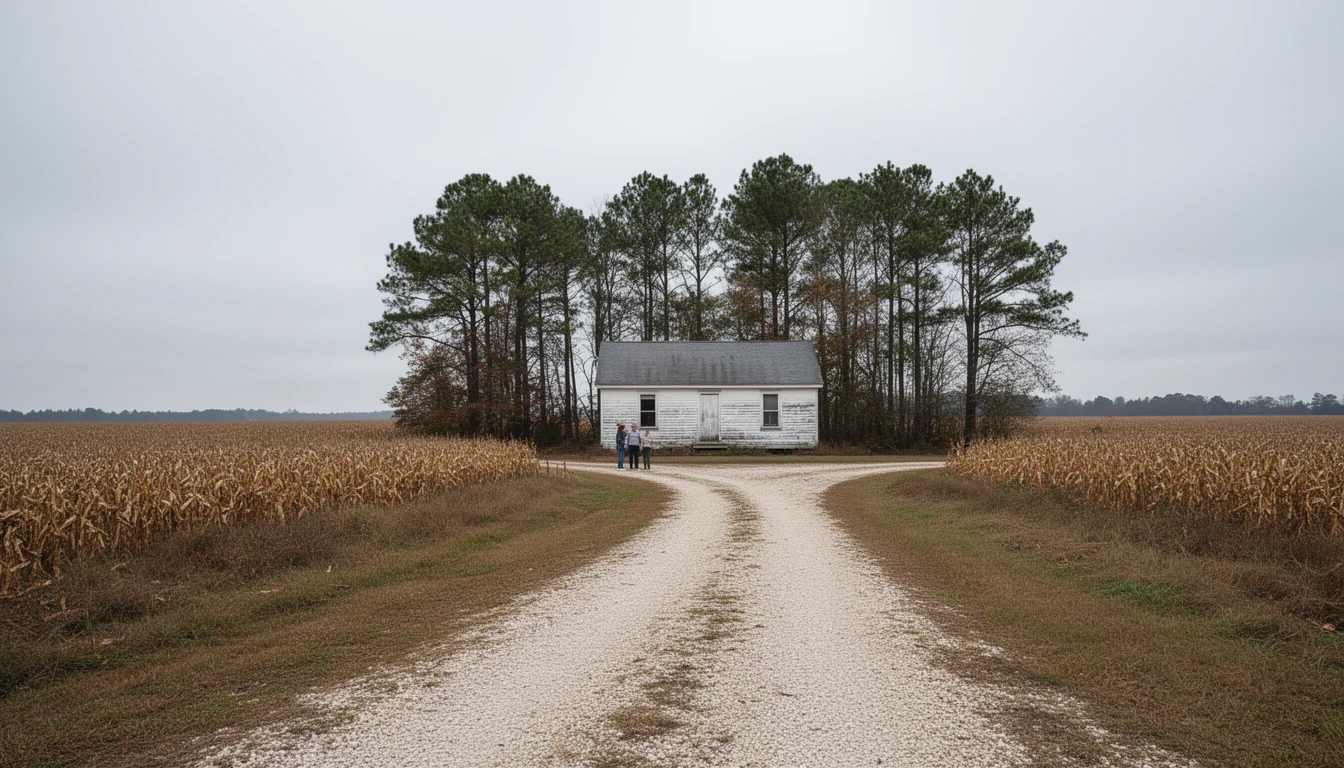
7 Signs a Rural Hertford County Listing Is Priced to Move
Seven signs a rural Hertford County listing is priced to sell: the septic file, de-titled mobile homes, price cuts, and what the land itself carries.

Commute Math from Ahoskie, Winton, and Murfreesboro
Hertford County commutes by the numbers: measured drive times from Ahoskie, Winton, and Murfreesboro to the mill, Greenville, and the Virginia line.

9 Things to Inspect on an Older Murfreesboro or Winton Home
An older Murfreesboro or Winton house has nine expensive surprises. Here is what to inspect, from roof age and sill rot to wiring, plumbing, and records.