
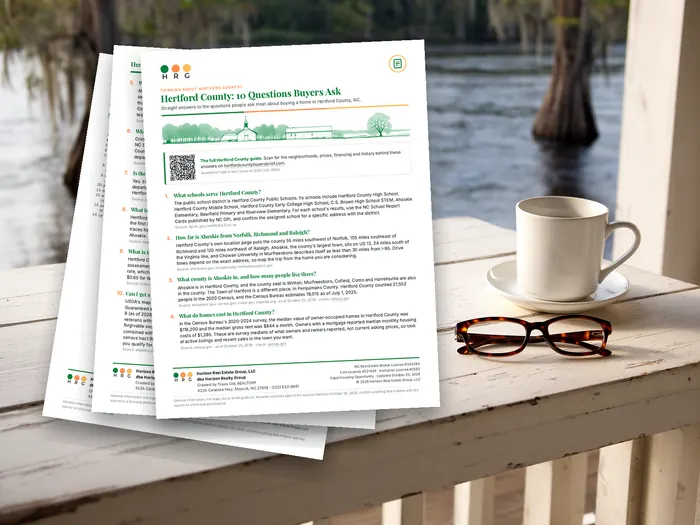
Hertford County Deeds: Nine Things the Paper Trail Shows

In this post
- 1. The name on the grantor line
- 2. Two dates, not one
- 3. What the description calls for
- 4. The chain, and the hole in it
- 5. Deeds of trust and their cancellations
- 6. Easements you cannot see from the road
- 7. The plat and the deed have to agree
- 8. Restrictions, and who maintains the road
- 9. The tax record beside the deed
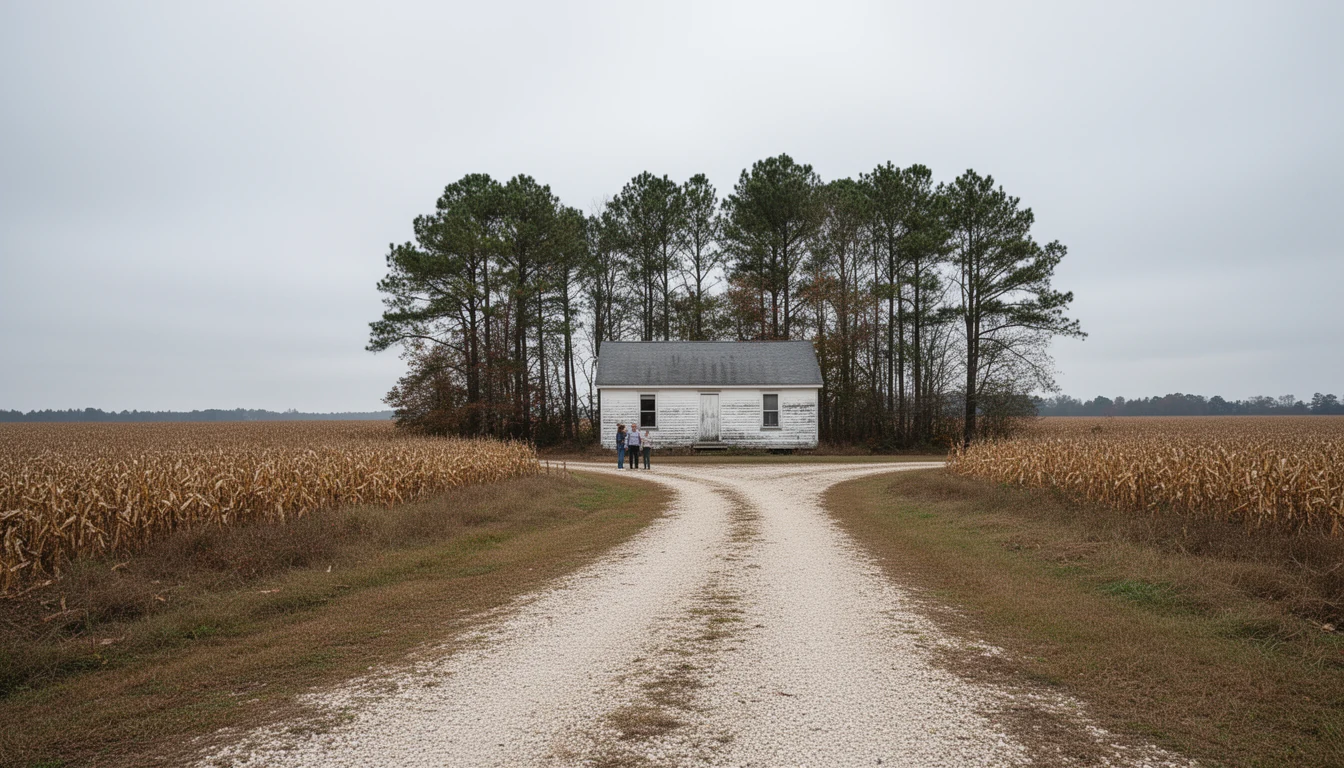
November is when a Hertford County farm finally shows you its bones. The soybeans are off, the cotton is in, and the ditch lines cut dark seams across ground that was solid green in July. Walk forty acres after the first hard frost and you can see where the water goes.
Then you get back in the truck and drive to Winton, because the land did not answer the questions that cost money.
I pull the deed before I write an offer. The Hertford County Register of Deeds sits at 119 Justice Drive, and the books there tell you who held title and how the county described the ground. They also show what was recorded against the parcel, and what nobody ever cleaned up. It is all public, and most of it is searchable online before you make a phone call.
Here are the nine things I read for, roughly in the order they have cost buyers money.
1. The name on the grantor line
In North Carolina a deed from a married seller normally carries both spouses’ signatures, even when only one of them is on title. A title examiner looks for that joinder. When it is missing somewhere in the chain, ask how it was handled and by what recorded document.
The same question applies to a deed signed by an attorney-in-fact. The power of attorney should be recorded with it. A signature from somebody acting for an owner, with no power of attorney in the book, is the kind of thing that turns into a phone call from the closing attorney eight days before settlement.
2. Two dates, not one
Every recorded deed carries an execution date and a file date stamped by the register. Usually they sit a few weeks apart. When they sit years apart, that gap is a question, not automatically a defect.
One case makes the gap decisive. A deed of gift has to be registered within two years of its making, or North Carolina treats it as void (G.S. 47-26). Family land changes hands by gift more often than buyers expect, and a gift deed that sat in a dresser drawer for a decade is not a rounding error.
3. What the description calls for
Older deeds here describe land by running from a stake to a black gum at the edge of a swamp, down a ditch to the run of a creek, then back to the beginning. Monuments like that rot. When they go, the description is only as good as the next surveyor’s judgment about where the gum used to stand.
So I compare two numbers that should agree and often don’t: acreage written into the deed, and acreage on the county tax card. Neither one settles it. A recorded plat or a current survey does, and on a parcel you intend to split, that survey is not a luxury.
4. The chain, and the hole in it
Winton was burned on February 20, 1862, and virtually every county record from 1830 to 1862 burned with the town. The courthouse that held earlier records had already been destroyed in 1830. Nobody can hand you a clean chain running from the county’s formation in 1759 to this morning, because that link does not exist.
Examiners work around it. Later deeds recite earlier ones, plats close gaps, and grant history closes others. What you want is a title examiner who explains that reconstruction in plain language. When the explanation sounds like hand-waving, get a second opinion before you spend money on the ground.
5. Deeds of trust and their cancellations
Most financing in this state is recorded as a deed of trust naming a trustee, not as a mortgage. When the loan is paid, a second document clears it: a cancellation, a trustee’s satisfaction, or a release. You want to see that document in the book.
An old deed of trust that was never cancelled stays in the index and keeps following the parcel. Almost always it is a scrivener’s lapse from decades back and it gets cleared with an affidavit. Almost always. The time to find out which kind you are looking at is before the closing table.
6. Easements you cannot see from the road
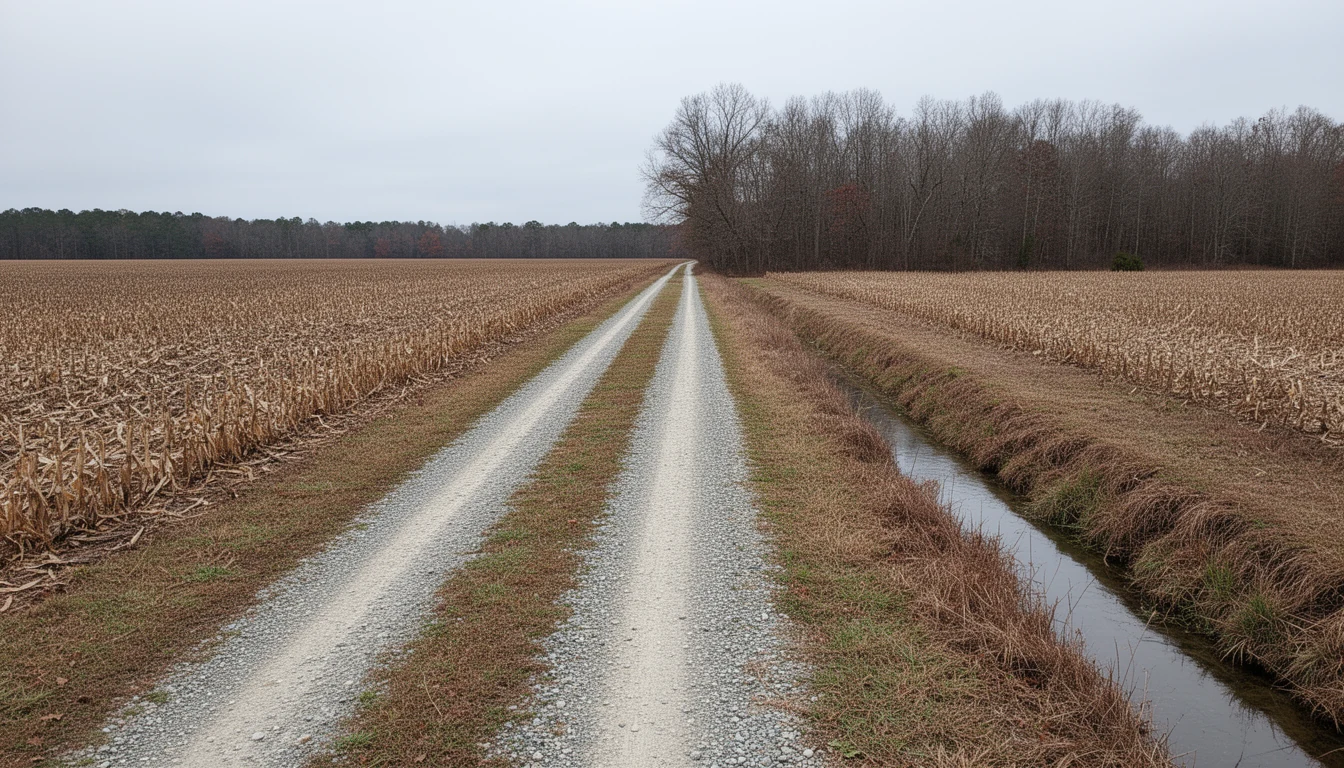
A drainage easement across the back field does not show up on a November walk, when the ground is dry. Neither does a power line right-of-way, until you want a shop under it. A shared lane serving a landlocked parcel is invisible until a neighbor starts grading.
These live in the grantor index. Search the prior owners’ names for easements and rights-of-way, then run the word agreement through the same index. On farm ground near the Meherrin or the Chowan, drainage is the one that changes what you can plant, and it is recorded more often than buyers expect.
7. The plat and the deed have to agree
If the tract was ever part of a subdivision, there is a recorded plat, and the plat is where the lot lines actually are. Deeds written off a plat sometimes carry a description that drifted from the map over sixty years of copying.
Take the plat number off the deed, pull the map, and lay the two side by side. A lot the plat shows as 1.2 acres and the deed calls 1.4 is not a crisis. It is a survey you now know to order, which is cheaper than finding out at resale.
8. Restrictions, and who maintains the road
Subdivision covenants stay on the record even when nobody has enforced them in years. Read them for the ones that still bite: setbacks, minimum square footage, what can be parked in the yard, whether a metal building is allowed at all.
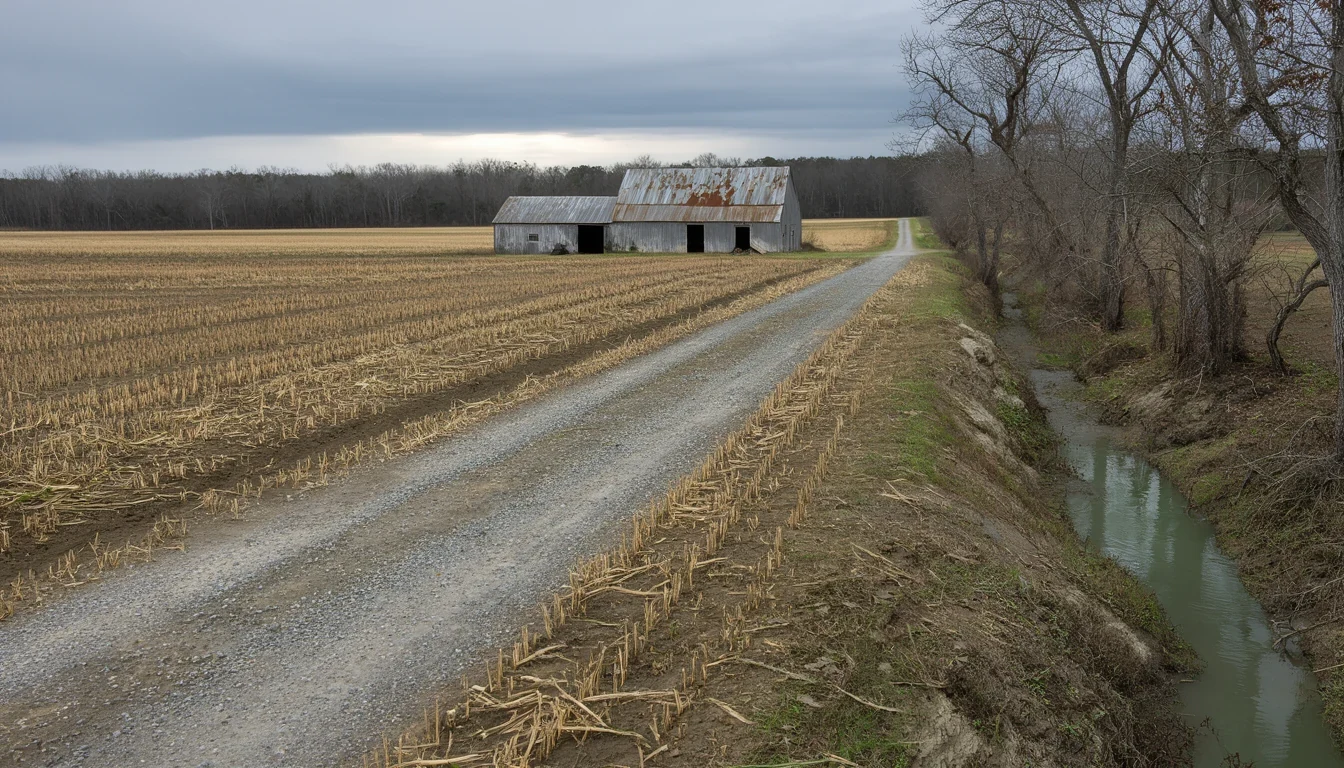
Rural lanes are the other half of this. Plenty of roads in Hertford County are private, maintained by the people who live on them under a written agreement, or maintained by nobody. Ask which category your road falls into and get the paper. A gravel lane that needs rebuilding is a real cost, and it will not be in the listing.
9. The tax record beside the deed
Two lines on the county record matter as much as the deed itself. The first is present-use value. Farm and forest land can be taxed on its use value instead of market value under G.S. 105-277.4, and the difference is deferred rather than forgiven. When the land comes out of the program, deferred taxes can come due. Ask for that figure specifically, not just the annual bill.
The second is the excise tax on the conveyance. North Carolina charges $1 per $500 of consideration (G.S. 105-228.30), so the number recited on the deed records what the parties said the land was worth. On a transfer between family members that figure can be far lower than what an outside buyer would pay. That is allowed, and it also means the deed price is not an appraisal.
None of this replaces a title search or a survey, and I am not the person who signs the opinion letter. What the record does is tell you which questions are worth paying to answer.
Outside, King Street runs down toward the Chowan and the pecans are already off the trees along the sidewalk. The land will still be there in March. The file is what tells you whether you can build on it, split it, or sell it without a fight.
Keep reading
Closing Costs in Hertford County: The Lines That Surprise
Closing costs in Hertford County, line by line: the excise tax the seller pays, recording fees, two title policies, prepaid escrows, and tax proration.
7 Signs a Rural Hertford County Listing Is Priced to Move
Seven signs a rural Hertford County listing is priced to sell: the septic file, de-titled mobile homes, price cuts, and what the land itself carries.

Commute Math from Ahoskie, Winton, and Murfreesboro
Hertford County commutes by the numbers: measured drive times from Ahoskie, Winton, and Murfreesboro to the mill, Greenville, and the Virginia line.